Archive for the ‘1. Forcible Entry’ category

Padlock Examples

11/17/2011

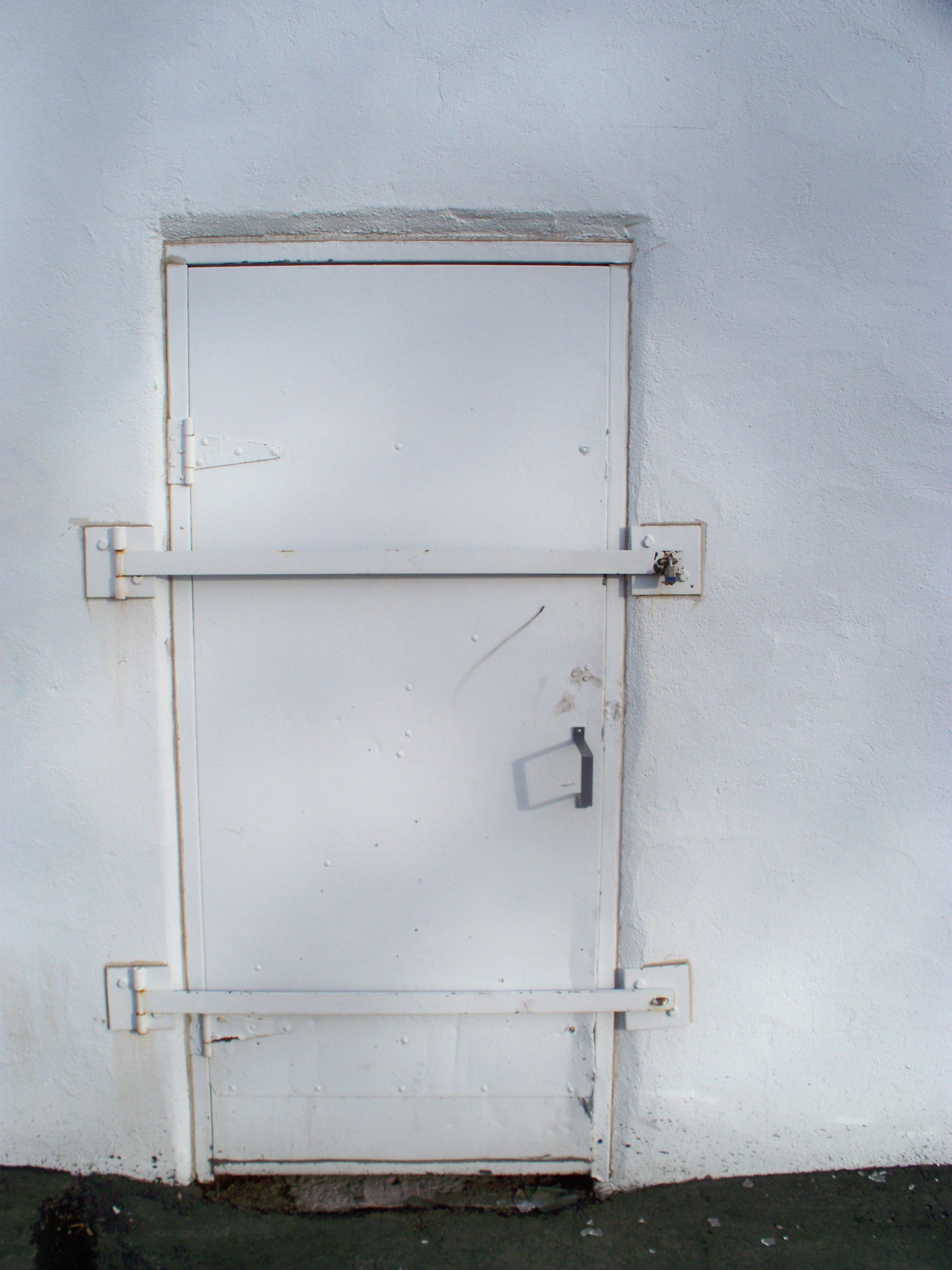
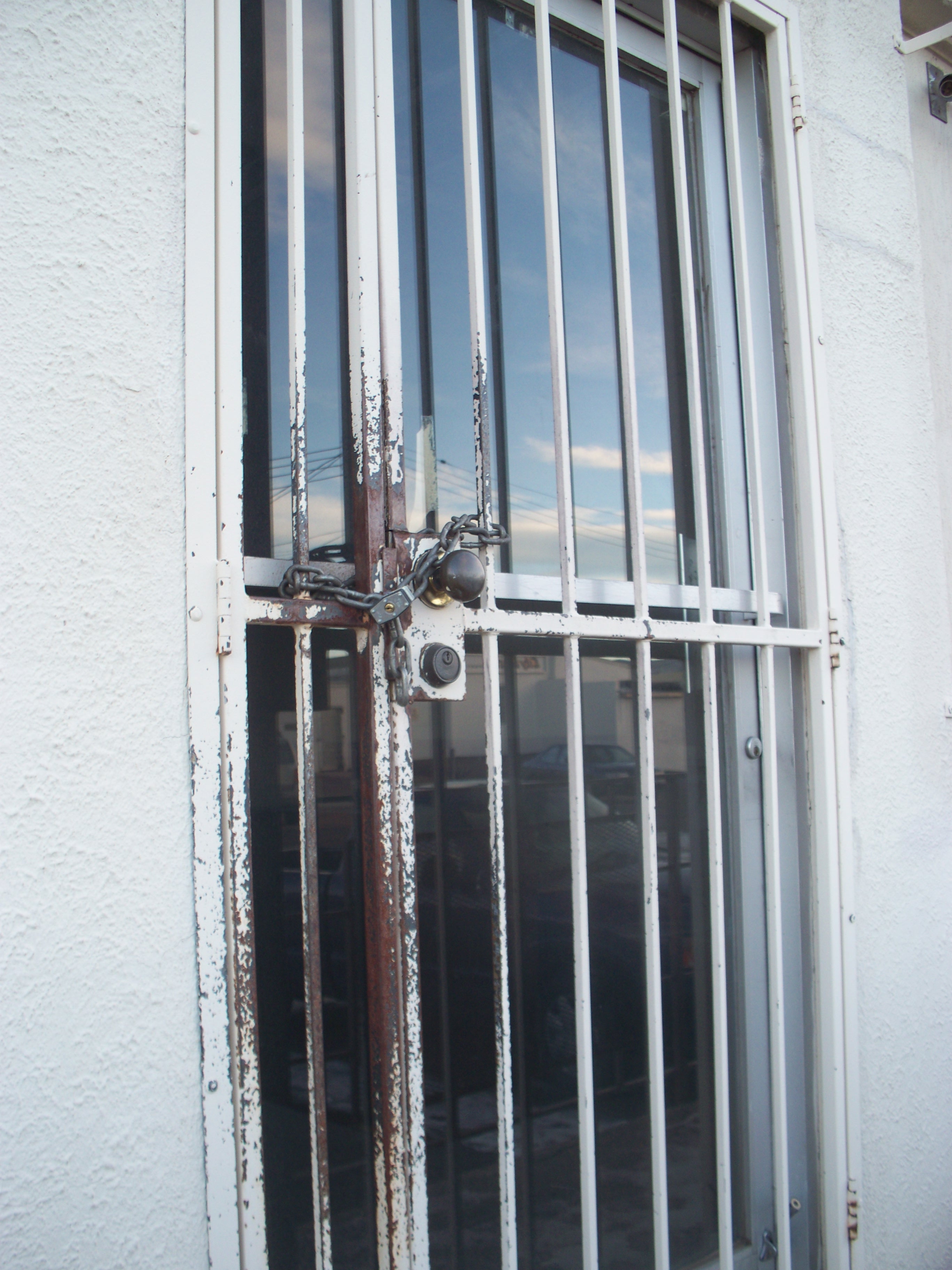
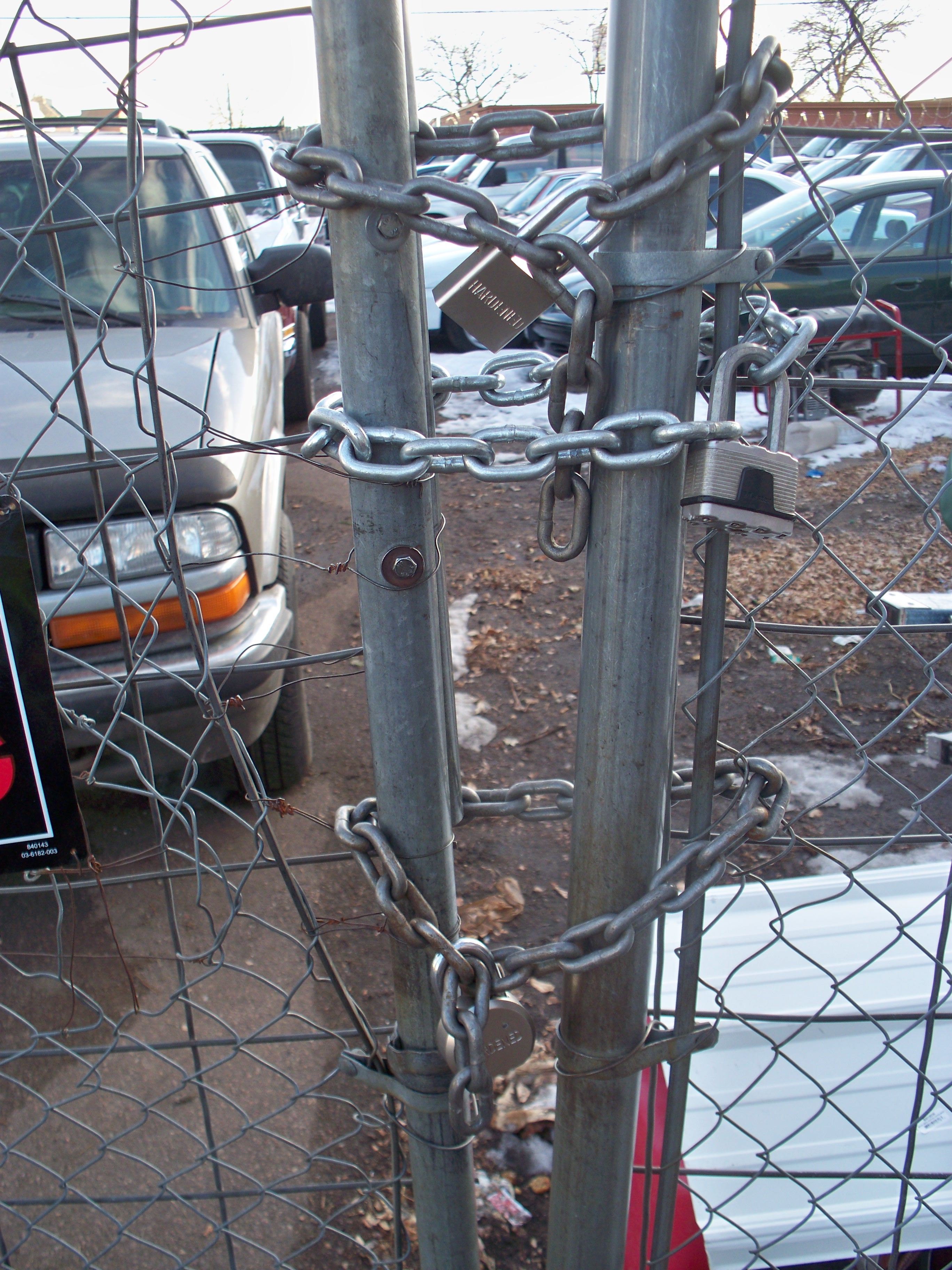
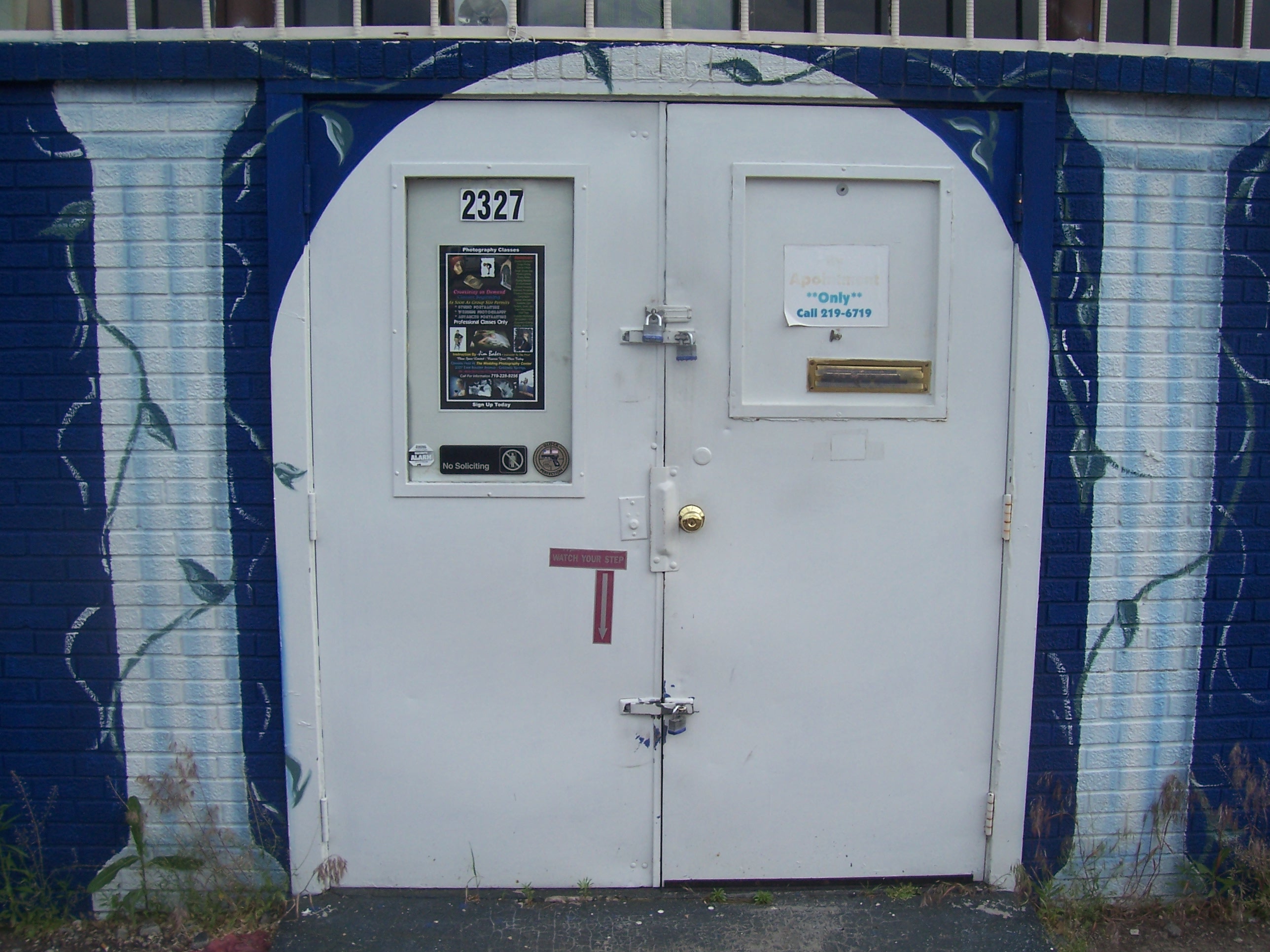
I had a conversation a while ago about padlocks and the use of a set of Irons or the Saw to go about defeating them. It came down to me justifying the need to be able to defeat padlocks with a set of Irons or a Power Saw. Bolt cutters are great but cannot be used in all situations and on all locks. There are plenty of readily available locks on the market that will not be defeated by bolt cutters, not to mention put a nice half moon in the cutting tips. This also brings up issues of access to these types of locks and where they are found. They are not just found on the gates or rollup doors on our buildings, padlocks are a very common way that people add extra security to their homes and businesses. When a fire comes in we typically have our irons or possibly a power saw, the bolt cutters are more than likely going to be found back on the Truck, so unless our locks are found on the gated entrance of the fire ground, running back to grab the bolt cutters may not be the fastest, most efficient and professional way to defeat our locks.

This post was not intended to be about defeating these types of locks, but more as an example of numerous ways they can be used to lock up. Most of these pictures were taken within a block or two of walking around in our neighborhood, it is not hard to find. Are you prepared to handle all the types of padlocks that our on the market?


Forcible Entry Class for the Terry Farrell Fund

10/06/2011

THIS CLASS IS NOW FULL. Check our Facebook page for constant updates on class details. www.facebook.com/ironsandladders

Announcing a Hands On Full Day Forcible Entry Class on November 2nd 2011 in Arvada Colorado. This is a benefit class to help our local Colorado Chapter of the Terry Farrell Fund. IRONS and LADDERS LLC will donate 40% of the admission fees to the Terry Fund. The Terry Farrell Fund is relatively new in Colorado and if you don’t know what they are about please visit their website at www.terryfundco.org
or their Facebook page at www.facebook.com/TerryFundColorado.

These guys are really putting a lot of time and energy into getting the Terry Fund in Colorado kicked off and have done a fantastic job. If you’re a firefighter, or family of one in Colorado, then they are here for you.

Please join us for a full day of hands on forcible entry while at the same time donating to a cause that may just come back to serve you or your department.  Click on the picture or the flyer link below for all the information about the class and how to register. Hurry and sign up, class size is very limited, but if we have enough interest we will add a second day full of spots.

Thanks to the Terry Farrell Fund for their help in organizing this event and to the Arvada Fire Department for the use of their Training Center. Please print out the flyer below and hang in in your firehouse or email to whoever may be interested.

Visit the IRONS and LADDERS LLC Facebook page for updated information, http://www.facebook.com/IRONSandLADDERS

Force Entry Class Flyer

Door Size Up #12

10/01/2011

Door #12, Take a look and give it a shot.

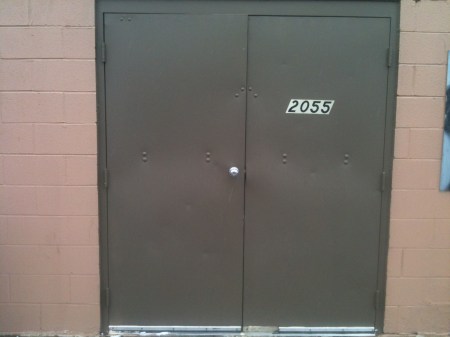
Here we are looking at the backside of a commercial retail building. We have a 1 story masonry block building with a metal frame/jamb and a set of outward swinging metal double doors.  With it being outward swinging on the backside of a commercial it is fairly safe to assume that our primary lock is a panic bar or at least was at some point and may have been removed. We won’t know until we start to force it. You can ignore what appears to be two sets of black bolts both high and low on the middle of the two doors. These are holes from previous bolts that you would have been able to see.

We have an obvious bolt pattern showing that we have a secondary security feature to this door. This is a fairly run of the mill drop bar bolt pattern when we are looking from the outside. It may be a little more significant due to the three mounts per door instead of two, but it is still fairly common.

Once we see the inside it is apparent that this door is a little more secure than it appears from the outside. We can see that the stock panic bar is still in place and would be considered our primary lock. We have multiple secondary locks. If you look above the panic bar you can see we have a slide bolt that was blind from the outside. We also see our drop bar mount setup, which in this picture does not have the bar in place.


When we look closer at the drop bar mounts you can see they are designed much better than our typical setups. The mounts are one piece of steel instead of each set of bolts having its own mount. It is also welded to the skin of the door on both ends of the mount.

This presents a couple of problems that you wouldn’t normally find with individual mounts. The solid mount all the way across will make it very difficult if not impossible to drive these bolts through with a set of irons. As you attack one set of bolts, the other bolts will hold that steel mount in place preventing the heads from being driven through. The welds also add to these problems. If you attacked the bolts with a saw allowing the heads to fall off, you still have the welds holding the bar to the door. This is why it is important for us to move back and forth from conventional irons work and saw techniques. If we cut these bolts attempting to drop the mounts off, we may not realize that the welds are present until we go back to conventional techniques and try to pry the door open. Welds can be intimidating and when done right can add significant strength to a homemade security system, however when not done properly (especially when welded to the thin door skin) it can actually weaken the holding metal for the mounts. Either way after these bolts have been defeated we should attack this door conventionally again.

Lastly you can see the 3/8 inch steel drop bar that is put in place and goes all the way across both doors. This again stresses the importance of getting out into our buildings and recognizing the variables in these drop bar systems. It may just take away some of the surprise when we go to bat against them on the real thing. It is a decent set of doors, but with a solid Plan A, B and C  I am confident we can defeat them.

Eagle River Fire and Vail Fire Forcible Entry Class

08/04/2011

One great weekend in the Vail Valley. Check out some of the pictures from the class, you can see the whole album at www.facebook.com/ironsandladders. Thanks for having us, everyone did a heck of a job. 

This slideshow requires JavaScript.

Door Size Up #11

07/13/2011

Most of the doors we put on here have some challenging or unique security features. This is mainly because it makes for good size up practice.  However a good portion of our doors out there have some sort of factory lock setups on them. It is important not to forget our basics and underestimate these doors. Poor technique and a lack of a good understanding on common lock setups, will  defeat someone just as quick.

Even in higher crime or busy areas of town you will still find occupancies that have not upgraded their security for whatever reason. Some may not do this due to the type of occupancy they are. I’ve seen nightclubs that would rather risk burglaries at night by having normal panic bar setups then risk being fined or shut down due to code violations.

Here is our door in question. This is just a main delivery door on the backside of a church that is located in a larger two story commercial complex.  The other occupanices in this building had very heavily fortified doors, however this was the only one we found with what appeared to be stock lock setups.

When we look at this door and hit our key size up points we see:

Commercial Building
Concrete and Masonry Block Constructions
Metal Frame/Jamb
Double Metal Doors
Commercial Rim Lock Indicating Panic Bars.

What we see is what we get on this door. This door does bring up some points that are important to think about. When we are looking at these double doors it is important for us to take note of what the primary door is. On this one it would be the door that has the handle and rim lock on it. On other doors it just may be a door knob and a deadbolt. This is important for a couple of reasons. Many times the primary door has less security to it because it is used more often. Many buildings that do not need the wide access of both doors will use extra locks or slide bolts on the unused side to make it more stable which intern makes the primary door more stable when it latches.  Take a look at the inside.

This door is a good example of a common way that panic bars are setup on double doors. The primary door simply has a latch that secures into its keeper mounted on the secondary door. The secondary door has the top and bottom throws connected to its panic bar. This is to keep the door nice and stable for the primary lock.

If we forced the primary door we have a simple irons work door that would be forced very quickly. If we had chosen the secondary door it would have presented a more difficult door with two locks, both of them being blind. The top and bottom throws could easily present complications and slow us down.

This is not a difficult door if we use proper technique and have a solid knowledge of door size up.


When Drop Bars Meet Panic Bars

05/31/2011

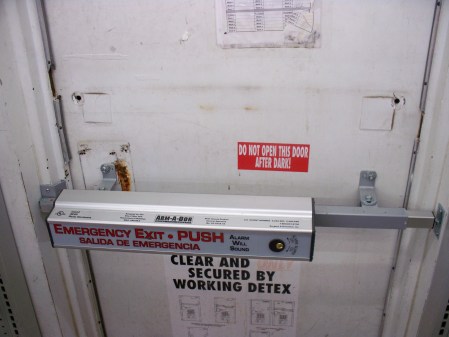
The Arm-a-Dor system is the commercially sold solution for a business owner that wants drop bar style security that will still pass an inspection. The district I work in seems to have very few of these, compared to other parts of the city that has newer construction or a large amount of big box chain stores . The trend that I have noticed is that when you do find these they are more than likely being used by larger companies that have standards on how their buildings are secured and are more concerned on staying code compliant over securing their goods. Where you do not find these very often would be in locally owned businesses or the “mom and pop” style businesses.

This system allows you to have a bar that secures both the hinge side and the lock side of a door. If installed properly it provides much longer of a throw than a typical deadbolt or generic panic bar system. It is becoming more popular because of the fact that it is unlocked by the panic bar system allowing them to keep occupants inside safe and pass inspections.


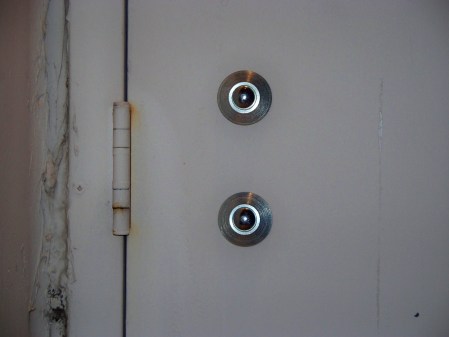
From the outside these doors will have a bolt pattern that presents like most drop bar mounts. The big difference when you look close is the types of washers they use. This is the easiest way for us to identify the system from the outside and puts us one step ahead when trying to determine what we are going up against. These washers are not flat but raise slightly off of the door and then have a recessed area for the heads of the carriage bolts to fit in. They are polished and have a very obvious look to them that they are commercially produced and not just something that was picked up from the hardware store. The angle that is created by the raised washers make the saw blades want to walk compared to the rough edge of a normal washer. The washers are also very large and this makes driving them through the door very difficult. 

When the systems are installed properly the bars are designed to extend behind the frames at least an 1 1/2″. This is how they are designed, however due to so many variables in the field, you will find a wide variety of installations that had to be modified. Many times this is better for us because they are poorly done and may only have 1/2 inch or even a 1/4 inch behind the frame or jamb. They can either extend behind the wall, or the frame can be drilled out and the bars can extend into the frame. Both are commonly used.


This above picture is a good example of how the craftsmanship of the installation is what makes this system strong or not. This one has the bar extending the proper length on the lock side of the door but you can see that the hinge side bar barely extends pass the frame. I have seen these the same way on the lock side, which defeats the entire system. This is why always trying conventional Irons work first is a good option. Depending on how these are installed they may pop very easily, if they do not then we move on to plan B. If we do not defeat the door conventionally then we will disable the system by defeating the bolts which still should make quick work of this door. A few other companies make similar systems to this but this is by far the most common in my city. In the end these will never be stronger than a well fabricated steel drop bar with good mounts, but it is a step up from the generic panic bar systems.

June 26th Forcible Entry Class

05/13/2011

The Northeast Teller County Fire District is hosting IRONS and LADDERS LLC on June 26 th 2011. This will be an open enrollment hands on forcible entry class. Participants will be largely from the Woodland Park and surrounding areas but this class is open to firefighters from any department. Registration is now open, feel free to contact us and sign up. Below is the flyer for the class, it has detailed course information and registration contact info.

June 12th Cripple Creek Forcible Entry Class

05/13/2011

Cripple Creek Fire and Emergency Services is hosting IRONS and LADDERS LLC on June 12th 2011. This is a closed session class for Cripple Creeks Reserve Academy. This class will be filled in house and should not have any other openings. If some arise we will post it for anyone interested.

Door Size Up #10

05/03/2011

This door is on the backside of a single story “L” shaped strip mall.  The store is used as an army surplus outlet.  Run down the key size up points and see what you think. The double doors are set in masonry construction.  What else do we see?

  1. Metal frame and metal jamb
  2. Outward swinging double metal doors
  3. Primary lock is key in knob
  4. Carriage bolt pattern on both doors indicative of a drop bar
  5. Carriage bolt pattern 18” above the lock suggestive of a hasp or possible slide bolt

The interior view of this door shows us what we are up against.  As we predicted we have a key in knob lock and a drop bar with a hasp that is padlocked.  There are several interesting points about this door.  As we could tell by the exterior picture, the seam where the doors come together has a wide gap (approximately 1/2”).  The occupant has attached a 1/8” piece of steel that runs the length of the doors to prevent anyone from trying to lift the drop bar out of place or manipulate the primary lock. These strips on the back of the door come standard on many double door setups, but many times occupants will fabricate their own to increase the security. This is the main reason you should force the lock side door when doing double doors. You want to force the one that closes last because that metal strip acts as a stop for the main door. If your pry on the secondary door you will be working against that strip.   Secondly, the drop bar is 1/4” steel that rests on two brackets on either door.  The weight and placement of the drop bar will be beneficial to us when we start to force entry.  The weight of this bar could be an advantage as we drive the carriage bolts through because it may cause the brackets to fail even quicker. Another thing to remember on double doors is to force the bolts on the primary door first, don’t waste your time taking all the bolts out across the whole door because it is not needed.  Also, note where the drop bar ends.  It only extends the width of the frame, greatly decreasing the degree of difficulty.  Lastly we have the hasp that is padlocked together.  This may offer a little more resistance because the lock is elevated slightly and will cause us to lose a little leverage when we force the door.  It should not be anything that we can’t overcome using the irons.

Mortise Cylinders V.S. Rim Cylinders

03/16/2011

There are a wide variety of different types of mortise locks and rim locks, found on both residential and commercial doors. It would be impossible to cover all of the different types of these locks and their variations in one article. 

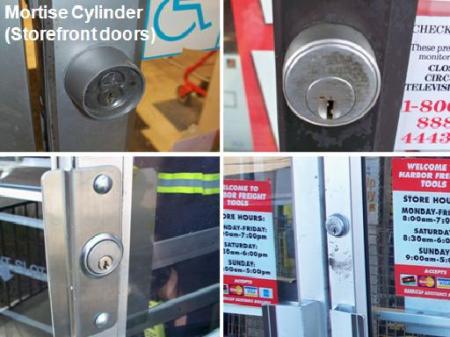
 However these locks have something in common. They are very routinely mistaken for each other when someone is practicing size up on these doors. Now there are many key features that can be studied and identified from the outside that would allow you to identify them far before you pull the cylinder. It does take some practice and attention to detail to pick up on these, so that you can efficiently identify them a majority of the time. We may make that an article for another day, for now we feel it is important to cover the bottom line of what needs to be identified to get in these locks.

The above picture is a good example where we may run across these types of locks. This door has a mortise cylinder and a rim cylinder. The top cylinder is a dummy lock that does not operate anything. Since we have the luxury of glass and no conditions behind it, we can easily identify these locks. We see the bars across the door behind the glass which line up with the bottom cylinder. That is our indicator that this will be a rim cylinder operating a panic bar (rim lock). When we look at the cylinder above we can expect this to be our mortise cylinder which is more than likely set in a adams rite mortise lock with a deadlatch. This is the most common lock found in these doors, and if you only have one cylinder showing it is probably this type of lock.

If we decide thru-the-lock is the tactic of choice and we decide to pull the cylinder, there are a few things for us to look at. If we did not know what type of lock we were dealing with before we pulled the cylinder, we can immediately identify it after it is removed. By taking a quick look at the cylinder it will inform us of the type of lock we are going to trip and what end of our tool we will need to use (Either the angled end or the straight end).
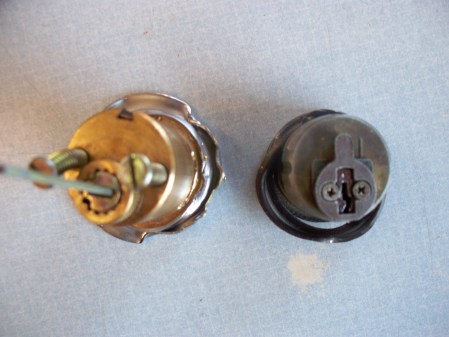
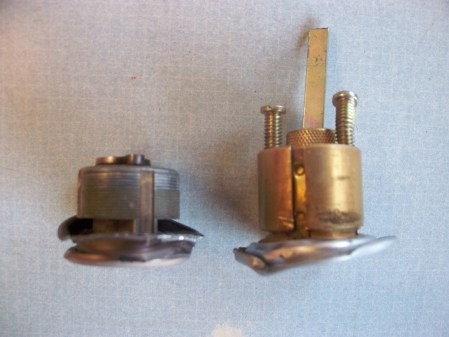
Pictured above are the two types of cylinders, the mortise is the dark colored cylinder and the rim is the gold cylinder. Even though these looked almost identical from the outside, you can now see significant differences. The mortise cylinder has the threaded body which holds it in place with a set screw whereas the rim cylinder has the two mounting bolts which connects to a thin metal plate on the back of the door. More importantly we can see the differences in their mechanisms. The mortise cylinder has the cam on the backside which rotates around as the key is turned allowing the small point on the cam to activate the lock. Next when you look at the rim cylinder you can see it has a stem which looks similar to the flat blade of a screw driver. This also turns and activates the lock. The main characteristic to remember from these above pictures is where the action of the lock is taking place. The mortise is activated downward and inside the door. The rim is activated straight back and on the backside of the door.

Here is a break down of each cylinder and lock by themselves.

You can see the mortise cylinder next to the commonly found Adams Rite Mortise Lock. By recognizing the previously discuss parts of this lock like the cam, we know we will be using the angled end of our tool to activate the pin below where the cylinder sat.
This picture is a good view of the mechanism behind mortise cylinders. A good landmark to remember is the open cutout on that arm that resembles a lightbulb. If you remember that cutout looks exactly like the shape of the cam on the back of the lock, and it also points to the exact spot we should place our tool to activate the button that can be seen in this picture. Once the button is depressed we will move the mechanism towards the jamb side of the door to release the latch. Not all mortise locks activate with the exact motion but a large majority of the do have a pin that needs depressed before the action can be made.
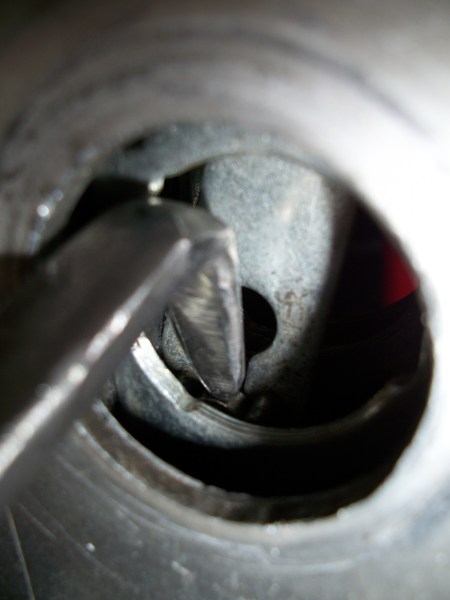
Next you can see the rim cylinder as if it had just been pulled.
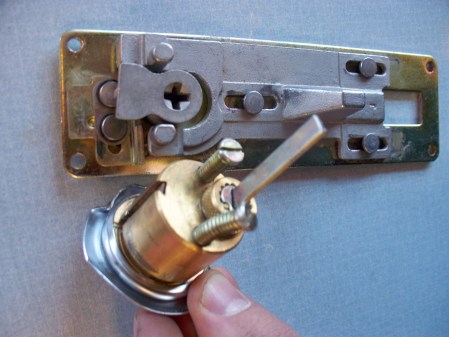
 

The key points that we see here are the mounting bolts and the long stem. This reminds us that our lock will be activated straight in on the backside of the door. You can see the tell-tale plus sign on the lock, this is where the stem fits in to activate the lock. Many of these are simple quarter turn locks that is easily done with a flat screw driver.

These locks can be easy to over think, and sometimes you try and use too much force due to the small simple action that typically throws these locks. After you give the lock a quarter turn or until you meet resistance, try the thumb latch if it has one, or pull on the door to make sure you haven’t just unlocked the door but forgot to pull it open before the latch went back into place. This will tend to happen on panic hardware as the latch is more than likely spring-loaded in the locked position.

The bottom line out of all of this is: Rim = Stem= Straight end of the tool
                                                                        Mortise=Cam= Angled end of the tool

To wrap up we have a couple pictures showing you some different ways that mortise cylinders and rim cylinders may present themselves in the commercial setting.