The Arm-a-Dor system is the commercially sold solution for a business owner that wants drop bar style security that will still pass an inspection. The district I work in seems to have very few of these, compared to other parts of the city that has newer construction or a large amount of big box chain stores . The trend that I have noticed is that when you do find these they are more than likely being used by larger companies that have standards on how their buildings are secured and are more concerned on staying code compliant over securing their goods. Where you do not find these very often would be in locally owned businesses or the “mom and pop” style businesses.
This system allows you to have a bar that secures both the hinge side and the lock side of a door. If installed properly it provides much longer of a throw than a typical deadbolt or generic panic bar system. It is becoming more popular because of the fact that it is unlocked by the panic bar system allowing them to keep occupants inside safe and pass inspections.

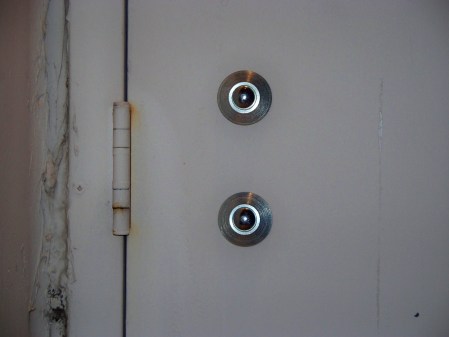
From the outside these doors will have a bolt pattern that presents like most drop bar mounts. The big difference when you look close is the types of washers they use. This is the easiest way for us to identify the system from the outside and puts us one step ahead when trying to determine what we are going up against. These washers are not flat but raise slightly off of the door and then have a recessed area for the heads of the carriage bolts to fit in. They are polished and have a very obvious look to them that they are commercially produced and not just something that was picked up from the hardware store. The angle that is created by the raised washers make the saw blades want to walk compared to the rough edge of a normal washer. The washers are also very large and this makes driving them through the door very difficult.
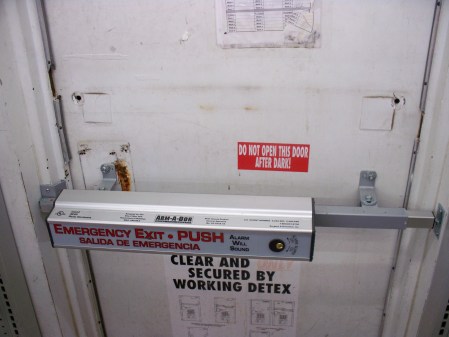
When the systems are installed properly the bars are designed to extend behind the frames at least an 1 1/2″. This is how they are designed, however due to so many variables in the field, you will find a wide variety of installations that had to be modified. Many times this is better for us because they are poorly done and may only have 1/2 inch or even a 1/4 inch behind the frame or jamb. They can either extend behind the wall, or the frame can be drilled out and the bars can extend into the frame. Both are commonly used.


This above picture is a good example of how the craftsmanship of the installation is what makes this system strong or not. This one has the bar extending the proper length on the lock side of the door but you can see that the hinge side bar barely extends pass the frame. I have seen these the same way on the lock side, which defeats the entire system. This is why always trying conventional Irons work first is a good option. Depending on how these are installed they may pop very easily, if they do not then we move on to plan B. If we do not defeat the door conventionally then we will disable the system by defeating the bolts which still should make quick work of this door. A few other companies make similar systems to this but this is by far the most common in my city. In the end these will never be stronger than a well fabricated steel drop bar with good mounts, but it is a step up from the generic panic bar systems.




 IRONSandLADDERS.com
Recent Comments